Regional seats go to rival candidates
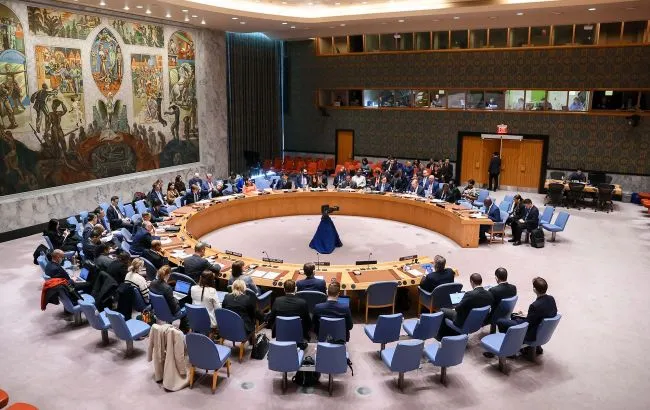
The elections involved 194 member states. In the contest for two Radio Regulations Board seats representing Eastern Europe and Northern Asia, Russia received 58 votes. Azerbaijan's Sitara Mehdiyeva won 111 votes and Kazakhstan's Rizat Nurshabekov received 70, securing the seats for 2027-2030.
Russia had nominated Nikolay Varlamov, a former board member whose service ended in 2022, according to Geneva Solutions.
Moscow also missed out on membership in the ITU Council, the body responsible for the agency's budget, strategy, and governance. The region's five Council seats went to Azerbaijan, Bulgaria, the Czech Republic, Poland, and Romania. That election, also for the 2027-2030 term, took place on November 16, 2026, at the ITU's Plenipotentiary Conference, known as PP-26.
Diplomatic stakes and Ukraine's response
Diplomats told Reuters that Russia wanted the positions both to expand its control over digital technologies and to lessen its international isolation. Western countries had warned before the vote about the prospect of greater Russian influence over telecommunications policy.
Reuters described growing war fatigue at the UN, with some countries resuming trade ties with Russia and avoiding open opposition to Moscow. One UN diplomat had assessed Russia's chances as better this time because some governments were seeking to normalize trade and security cooperation with it.
Ukraine's ambassador to the UN in Geneva, Yevhenii Tsymbaliuk, said the outcome sent the Kremlin a clear message. "Russia should stop its aggression, otherwise it will remain isolated from the main roads of international policy," he said.
Tsymbaliuk put the damage from Russian attacks on Ukraine's telecommunications infrastructure at more than $2.5 billion, excluding cyberattacks and satellite-signal interference.
The defeats followed Russia's losses at the 2022 Plenipotentiary Conference in Bucharest, seven months after its full-scale invasion of Ukraine. Geneva Solutions reported that Russia lost its Council seat and Radio Regulations Board membership there, while its candidate for secretary-general, Rashid Ismailov, received 25 votes to Doreen Bogdan-Martin's 139.
The agency's remit and funding
Established in 1865, the ITU ranks among the oldest UN agencies. Its work includes allocating radio-frequency spectrum worldwide and setting standards for artificial intelligence and other emerging technologies.
Russia remains among its ten largest contributors, providing CHF 4.8 million, according to Geneva Solutions. The United States is the largest funder, contributing just over CHF 11 million annually toward the agency's CHF 165 million budget.
Satellite filings are another part of the ITU's work. The agency reported that processing took eight and a half months at the end of October 2026, half the 17 months recorded in June 2025 but still above the four-month regulatory target. The improvement followed the Council's redistribution of more than CHF 11 million in savings during 2026, including CHF 2.3 million for the radio sector.
Other leadership results
The ITU said American Doreen Bogdan-Martin won another term as secretary-general on November 12, 2026, at PP-26 in Doha, receiving 164 of the 173 votes cast. Bahrain's Adel Darwish was elected deputy secretary-general.
Delegates also elected France's Eric Fournier to lead the Radiocommunication Bureau and Estonia's Nele Leosk to lead the Telecommunication Development Bureau. Japan's Seizo Onoe won re-election as director of the Telecommunication Standardization Bureau.
According to the ITU, Leosk's election marks the first time two women will serve simultaneously as elected officials of the agency.