Joint services and technical collaboration
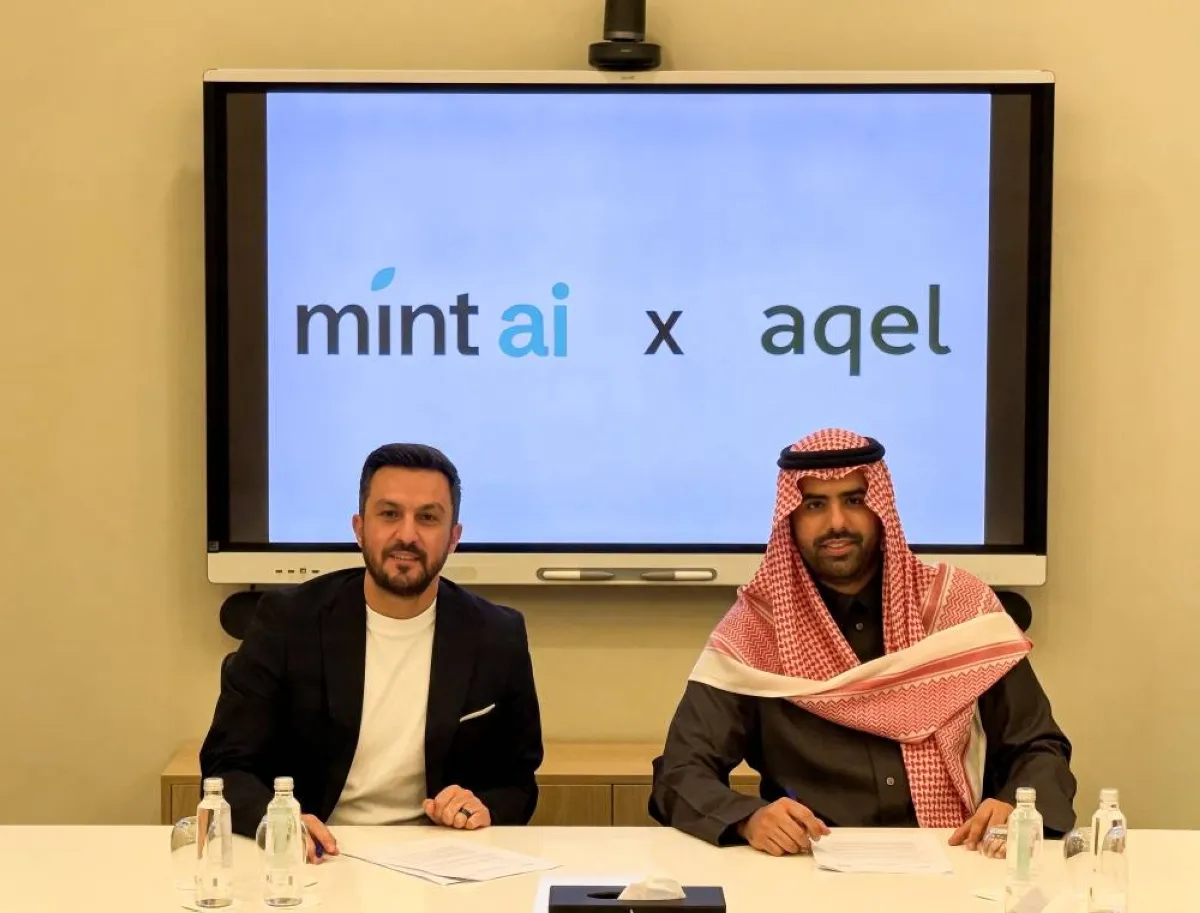
Aqel AI CEO Saud Al Sheikh and Mint AI CEO Raed Bou Hamdan signed the agreement in Riyadh. Their companies plan to combine expertise throughout the compute infrastructure lifecycle, covering assessments of business needs, system design, and 24-hour operations and management.
Teams in Doha and Riyadh will collaborate on technical work and jointly deliver compute-as-a-service, sovereign cloud and AI programs. The agreement also calls for sharing industry contacts and information to identify opportunities with technology providers, data center operators and investors.
The companies say they want to strengthen local technical capabilities and talent while expanding ties with public- and private-sector institutions in Qatar and Saudi Arabia, as well as regional and international partners. Their stated goal is secure infrastructure designed, built and operated within the region, with AI capabilities controlled by regional institutions and serving local communities.
Data residency and local control
The partners say every project will be designed to keep data within the relevant country and meet that country's data protection and cybersecurity requirements.
Bou Hamdan linked that approach to skills, infrastructure ownership and locally relevant applications: "Sovereignty in AI begins with empowering qualified talent, owning secure infrastructure, and developing AI models and applications aligned with the local context."
He added: "At Mint AI, we believe we have no competitors, only partners and friends. Our partnership with Aqel is a model of what Gulf and, more broadly, Arab collaboration can achieve when expertise is combined and knowledge is shared."
In Qatar, residency obligations come from sector-specific and government rules rather than a blanket requirement in the Personal Data Privacy Protection Law, Law No. 13 of 2016. That law does not itself require data to stay in Qatar.
The Qatar Central Bank's April 2024 Cloud Computing Regulation requires QCB approval for any cloud arrangement. Unless the bank grants an exception, primary storage and processing of personal, sensitive and financial data must take place in Qatar. The NCSA's National Data Classification Policy also sets residency requirements for government and critical-sector data.
Aqel's capacity roadmap and Saudi expansion
Al Sheikh said the partnership supports Aqel's roadmap to reach 50 MW in Saudi Arabia by 2032. He described regional collaboration on AI infrastructure and keeping pace with global advances as aims of the agreement.
Aqel's website lists its first data center, RUH01, at 24 MW, but gives no completion date. The company advertises NVIDIA Blackwell GPU-as-a-Service using an InfiniBand fabric, hosted on infrastructure within Saudi Arabia, with a 24/7 NOC and SLA.
Saudi Arabia had 467 MW of operational data center capacity in the first quarter of 2026, compared with 440 MW at the end of 2025, according to the Ministry of Communications and Information Technology. In June 2025, the ministry and SDAIA set a national target of about 1.5 GW by 2030.
PIF-backed HUMAIN has separately stated an interim target of 1.9 GW by 2030 and a pipeline of 6.6 GW by 2034.
Qatar's infrastructure and Arabic AI initiatives
Qatar's wider AI initiatives include Qai, a national AI company launched on December 8, 2025, as a Qatar Investment Authority subsidiary. On December 9, 2025, Qai and Brookfield Asset Management announced a $20 billion joint venture for AI infrastructure in Qatar and selected international markets.
Qatar also has Fanar, a sovereign Arabic AI platform inaugurated on December 10, 2024. The Qatar Computing Research Institute at Hamad Bin Khalifa University develops and operates the platform with the Ministry of Communications and Information Technology.
Fanar 2.0 arrived in December 2025 as a 27-billion-parameter model built on Google's open-weight Gemma 3 base. QCRI has said it is targeting December 2026 for Fanar 3.0.