UAE transits recover faster than Qatar's
The October traffic came entirely from the Gulf's two biggest LNG exporters: 23 cargoes originated at Qatar's Ras Laffan hub and eight at Das Island in the United Arab Emirates.
Eric Yep, a senior principal analyst at S&P Global Energy, described the gap between the two countries' recoveries: "We are looking at UAE back to pre-war transit levels and Qatar at over 30% of pre-war Hormuz transits."
Separate figures from Kpler tracked an increase in cargo loadings. Its ship-tracking data recorded 42 LNG cargoes loaded in October, compared with 27 in September. Ras Laffan accounted for 35 October loadings, carrying more than 2.7 million tons—the hub's highest total since the war began. Das Island's seven loadings were unchanged from September.
Qatar's prewar exports were substantially larger: it shipped nearly 6.2 million tons in February 2026, before the conflict disrupted shipping.
November gains amid lasting damage
The pickup at Ras Laffan continued into November. Bloomberg reported on Nov. 10 that loadings so far that month had ranged from 13 to 15 on a 10-day moving average, compared with about 11 in October. Even so, that was roughly half the prewar pace. In the 10 days through Nov. 8, 11 laden Qatari LNG tankers passed out of Hormuz.
Qatar is also dealing with damage to its production facilities. According to CNBC, Iran's March 2026 attack on Ras Laffan severely damaged two production lines and disabled about 17% of the country's LNG export capacity. Energy Minister Saad Sherida Al-Kaabi has said the repairs will take about three years.
CNBC reported that Qatar has declared force majeure every month since the attack. Energy Intelligence said those declarations had been extended through December 2026 for Italy's Edison and some Pakistani buyers, despite the recovery in exports.
Transfers off Oman and demand from Kuwait
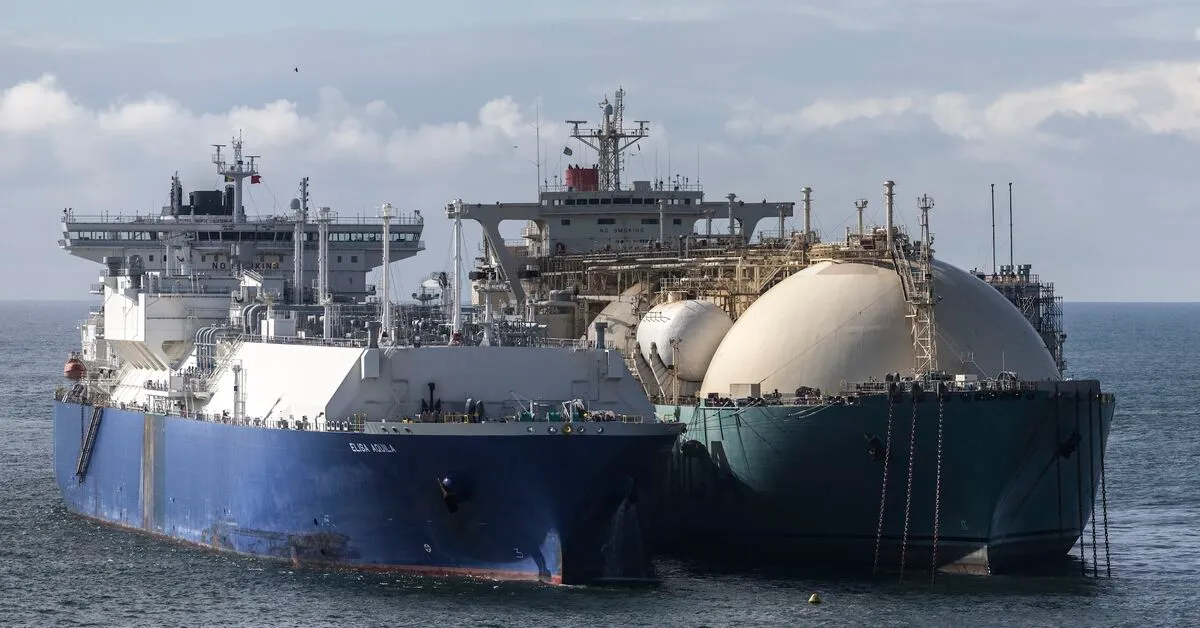
Two Ras Laffan carriers transferred their LNG to other ships near Oman's Sohar anchorage after leaving Hormuz, according to Kpler. The SC Prestige handed its cargo to the BW ENN Crystal Sky, which is now heading to South Korea.
The other carrier, the Al Mafyar, split its LNG between the Shandong Redwood and Ejnan. Both receiving vessels delivered their cargoes to Pakistan, Kpler data showed.
Kuwait has also bought more Qatari LNG. Kpler figures cited by Energy Intelligence put Qatar's deliveries to Kuwait at 5.07 million tons so far in 2026, already above the 4.78 million tons supplied during all of 2025.
European prices remain above prewar levels
Bloomberg reported that European gas prices had fallen from their late-October highs but were still more than twice their level before the conflict began.