Consultations and military cooperation
The signing took place during the 12th meeting of the countries' Supreme Strategic Committee on Friday. Turkish President Recep Tayyip Erdogan and Qatar's Emir Sheikh Tamim bin Hamad Al Thani co-chaired the Istanbul talks.
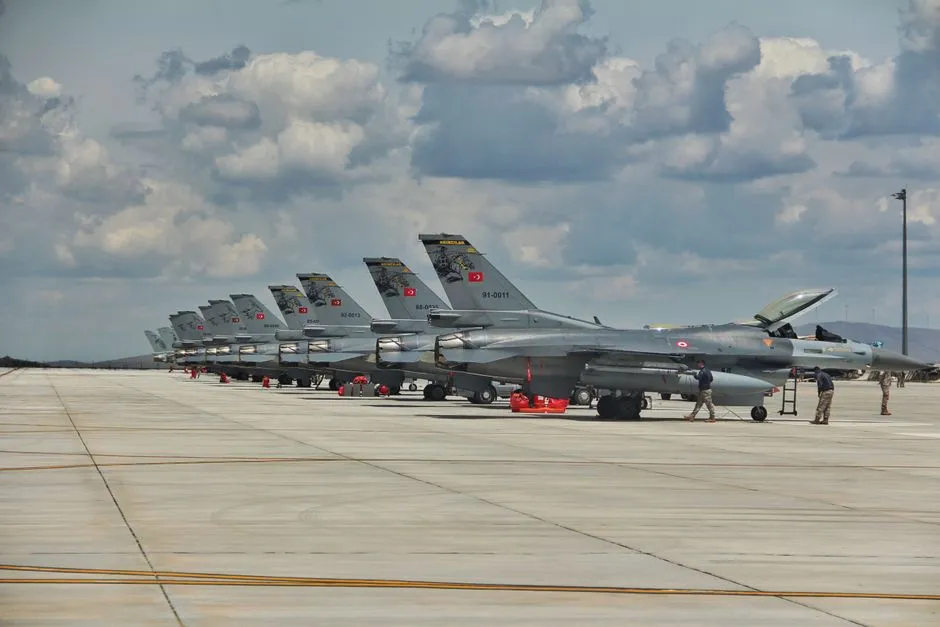
Under the agreement, the governments will consult on security threats and defense policy. Al Jazeera reported that the joint communique also calls for expanded military exercises, collaboration between defense industries and exchanges for personnel training.
The communique welcomed a separate defense-industry initiative, the Badr memorandum, signed by Turkey, Qatar, Pakistan and Indonesia. That arrangement covers joint production, technology development and information sharing, along with efforts to strengthen supply chains.
No automatic troop commitment
The pact's full text has not been made public. As reported by Al Jazeera and The New Arab, the communique leaves both the conditions for activating the agreement and the nature of any joint response unspecified. It neither explicitly treats an attack on either country as an attack on both nor establishes an automatic requirement to send military forces.
Those provisions differ from the separate Makkah Defence Pact linking Turkey, Saudi Arabia and Pakistan. According to The National, that trilateral agreement follows NATO's Article 5 model by treating an attack on any signatory as an attack on all. Ankara has nevertheless ruled out deploying troops against the Houthis under it.
Turkey's law approving the Makkah pact took effect on Saturday, November 14, 2026, one day after the Qatar agreement was signed. Parliament had ratified it on November 5 in a 279-119 vote.
Regional conflict and an established military relationship
Al Jazeera and The New Arab placed the signing against the backdrop of the US-Israeli war on Iran and disrupted shipping through the Strait of Hormuz. Their reporting and cited analysts also noted that Qatar had faced Iranian missile and drone attacks earlier in 2026.
The agreement builds on military ties formalized in December 2014 through a defense cooperation accord, The New Arab reported. Turkey began sending troops to the Tariq bin Ziyad base near Doha in 2015. During the 2017 Gulf blockade, Ankara supported Qatar by speeding up deployments and refusing demands to shut the base.
Trade and energy commitments
The summit communique also described the countries' economic relationship, putting the value of 206 projects completed by Turkish contractors in Qatar at $20.8 billion.
The governments reaffirmed their goal of increasing bilateral trade to $5 billion and committed to closer energy cooperation, with particular attention to liquefied natural gas.