Coexistence at home and dialogue abroad
The 2026 observance comes against a backdrop of humanitarian crises, deepening polarization and online incitement. In Qatar, efforts to support coexistence include laws against discrimination, dialogue across faiths and cultures, and education, alongside diplomacy focused on mediation and cooperation.
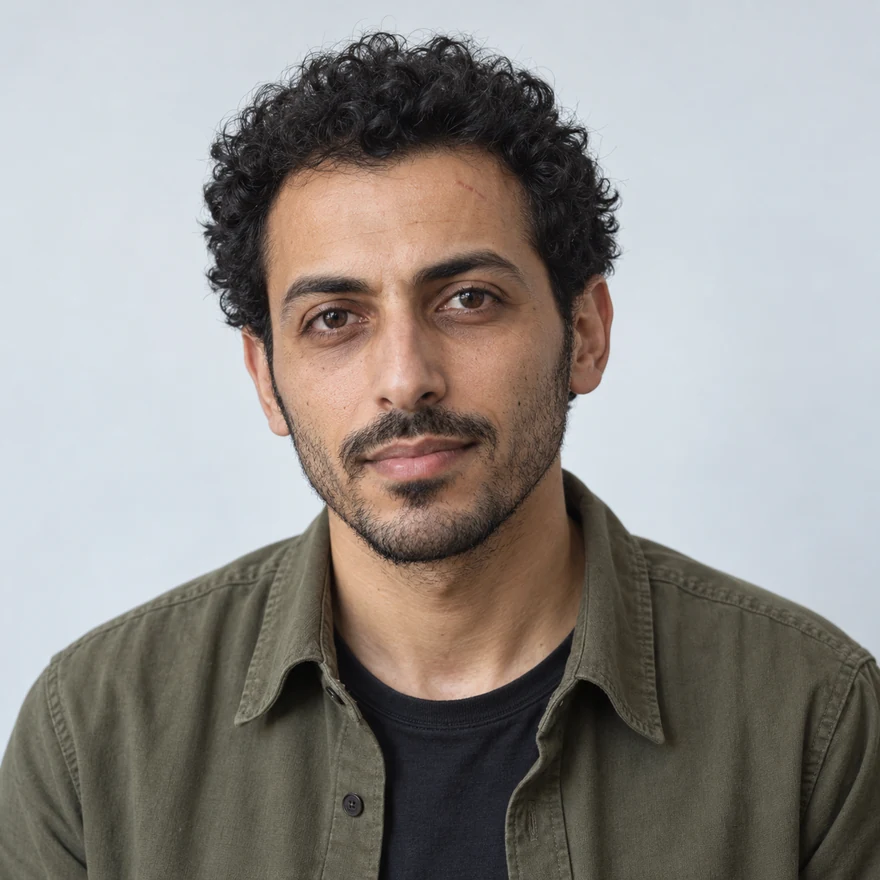
Nayef Al Nabet, a non-resident fellow at the Middle East Council on Global Affairs, told QNA that Qatar combines a commitment to its national identity and Arab and Islamic values with engagement with other cultures. In his account, diversity offers a source of strength when institutions uphold rights, support coexistence and oppose discrimination.
Al Nabet linked that approach to Qatar National Vision 2030, which identifies tolerance, dialogue and cultural openness as components of social development. He said the same principles inform Qatar's diplomacy: engaging parties with competing interests, finding common ground and preventing political disagreements from hardening into lasting divisions.
Qatar's Ministry of Foreign Affairs lists the January 2025 Gaza ceasefire, reached with Egypt and the United States, and the October 2025 Pakistan-Afghanistan ceasefire among its recent mediation milestones. Its list also includes the November 2025 Doha Framework Agreement for Peace between the Democratic Republic of the Congo's government and the M23 movement, followed in December by the "Doha Agreement to Consolidate the Commitment to Peace" between Colombia's government and the EGC group.
Earlier entries include the March 2020 US-Taliban Doha Agreement and the evacuation of more than 110,000 people from Afghanistan in August 2021. Al Nabet described peaceful dispute resolution as a central foreign-policy principle and said Qatar's experience demonstrates that differences do not have to become hostility.
Education and opportunities for dialogue
Al Nabet also emphasized the contribution of Qatar Foundation for Education, Science and Community Development, national and international universities, and QatarDebate. He said these institutions encourage critical thinking and respect for disagreement, while bringing students and researchers from different backgrounds into direct contact that can help break down stereotypes.
Founded by Qatar Foundation in 2008, QatarDebate Centre is the country's national debating organization. Its work spans competitive debate, academic research, public dialogue and outreach, including the "Oasis of Dialogue" platform and the Doha Forum: Youth Edition.
For Al Nabet, tolerance in Qatar is more than a moral principle: it is part of education, social development and diplomacy, supporting coexistence in response to hatred, discrimination and conflict.
How platforms amplify division
Dr. Raian Ali, UNESCO Chair in Digital Technology and Human Behavior at Hamad Bin Khalifa University, told QNA that online visibility does not necessarily reflect an idea's accuracy or fairness. Platforms that reward attention, reach and time spent on screen can give provocative or divisive posts an advantage over balanced content.
Ali said technology alone cannot solve the moderation problem. Sarcasm, coded language and misleading material stripped of context can challenge even advanced algorithms. Moderators also need to consider who published the material, their motives and its possible effects on the groups being targeted.
He urged users to treat correcting false information and challenging abuse as responsibilities of digital citizenship. Research at Hamad Bin Khalifa University found that people often welcome such interventions but do not always make them themselves.
Platforms also have a responsibility to address misinformation and misconceptions that encourage hatred, discrimination and intolerance, Ali said. He called for algorithm changes, appropriate legislation and greater tolerance online to protect society from digital hatred and polarization.
Survey findings on online hate
A UNESCO-Ipsos survey across 16 countries found that 67% of internet users had encountered hate speech, with the figure reaching 74% among those younger than 35. Concern about digital misinformation's effect on social stability stood at 85%, while 87% supported action by governments and regulators against hate speech and incitement, provided freedom of expression was preserved.
Ipsos interviewed 8,000 internet users ages 18 and older, with 500 respondents in each country, from August 22 through September 25, 2023. The samples were representative of each country's adult internet-user population. Countries were selected because national elections were expected in 2024.
Asked where hate speech was most prevalent, respondents most often named Facebook at 58%, followed by TikTok at 30%, X at 18% and Instagram at 15%. They identified LGBT+ people, cited by 33%, and ethnic or racial minorities as the main targets of online hate speech.
The origins of the observance
The United Nations observes the International Day for Tolerance every November 16 to encourage openness, mutual understanding and peace. General Assembly resolution 51/95 established the day in 1996, inviting member states to organize activities for schools and other educational institutions as well as the broader public.
The observance followed the 1995 United Nations Year for Tolerance, which the General Assembly had proclaimed in 1993 at UNESCO's initiative. On November 16, 1995, UNESCO adopted its Declaration of Principles on Tolerance, defining tolerance as "respect, acceptance and appreciation of the rich diversity of our world's cultures, our forms of expression and ways of being human."
UNESCO also established the UNESCO-Madanjeet Singh Prize for the Promotion of Tolerance and Non-Violence in 1995, marking both the UN Year for Tolerance and the 125th anniversary of Mahatma Gandhi's birth. Awarded every two years on November 16, the prize recognizes significant scientific, artistic, cultural or communication activities that advance tolerance and nonviolence.